
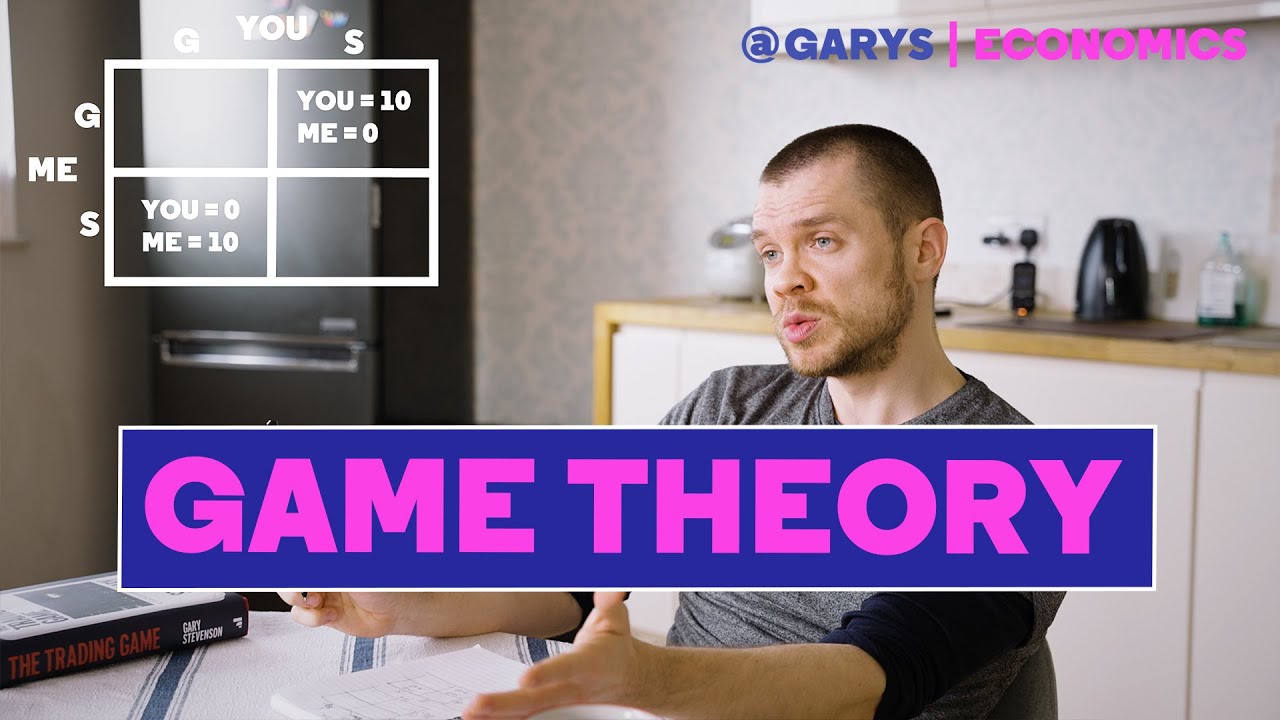
Rethinking Game Theory: A Call for a New Perspective

Rethinking Game Theory: A Call for a New Perspective
For decades, economists have leaned heavily on game theory as a cornerstone of strategic decision-making and behavioral economics. However, a fresh perspective suggests that the traditional understanding of game theory might be flawed. Let's delve into why game theory, as we know it, might be broken and how we can reframe our approach to it.
The Traditional Understanding of Game Theory
Game theory, a mathematical model of strategic interaction among rational decision-makers, has been widely used to predict outcomes in economics, political science, and psychology. The most well-known example is the Prisoner's Dilemma, which suggests that individuals, acting in their self-interest, often make decisions that are suboptimal for the group.
Challenging the Norms
Gary Stevenson, an insightful critic of conventional economics, argues that for seventy years, economists have misunderstood game theory's core principles. The assumption of inherent selfishness as the fundamental driver is being questioned. Commenters on Stevenson's video bring fresh insights:
- @andybrice2711 highlights a strategy known as "Forgiving Tit-for-Tat," which suggests a more nuanced, cooperative approach that mirrors real-life human interactions.
- @arimolyki criticizes the use of the Prisoner's Dilemma to showcase selfishness, suggesting instead that it reflects a system designed to incentivize such behavior.
- @hongimaster points out that the dilemma might be more about informational deficits rather than pure selfishness, indicating that communication could lead to better collective outcomes.
Educating for Change
Stevenson's call to action is clear: we must educate ourselves about the economy and work towards collective betterment. He suggests:
- Understanding societal issues and educating ourselves on economic principles.
- Working towards the collective good by acting in unselfish ways.
- Protecting ordinary people from exploitation by the powerful and wealthy.
- Engaging in collective action to address societal challenges like inequality.
Moving Forward with Game Theory
To truly utilize the potential of game theory, it's crucial to integrate communication and cooperation into its framework. This shift could transform how we perceive strategic interactions, moving from a focus on competition to one on collaboration.
In conclusion, while traditional game theory has its merits, it's time to expand our understanding and application of these concepts. By doing so, we can foster a more cooperative society that recognizes the value of working together for a common good.
Join the Conversation
We encourage readers to engage with these ideas and start conversations in their communities. Visit Gary's Economics for more insights, and connect on social media to share your thoughts.
Loading comments section...